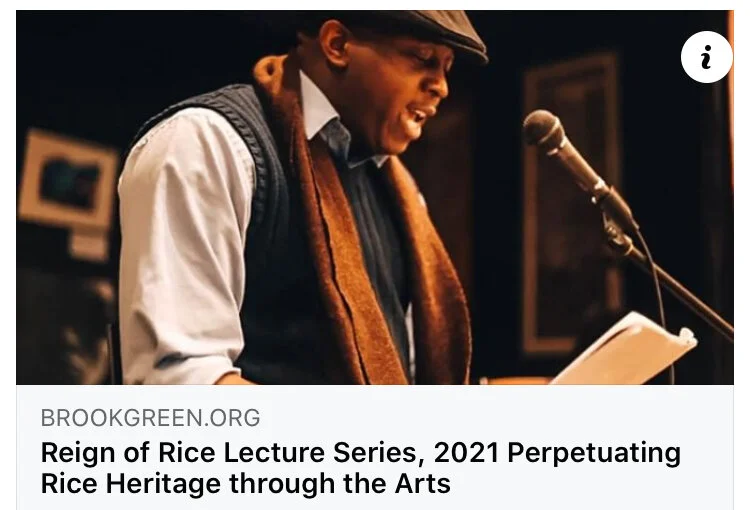
Grateful to Brookgreen Gardens and Mr. Ron Daise for the opportunity to present an hour lecture this past Saturday. The topic was “Storytelling, Language, & Culture in Sierra Leone and Gullah Geechee Communities”
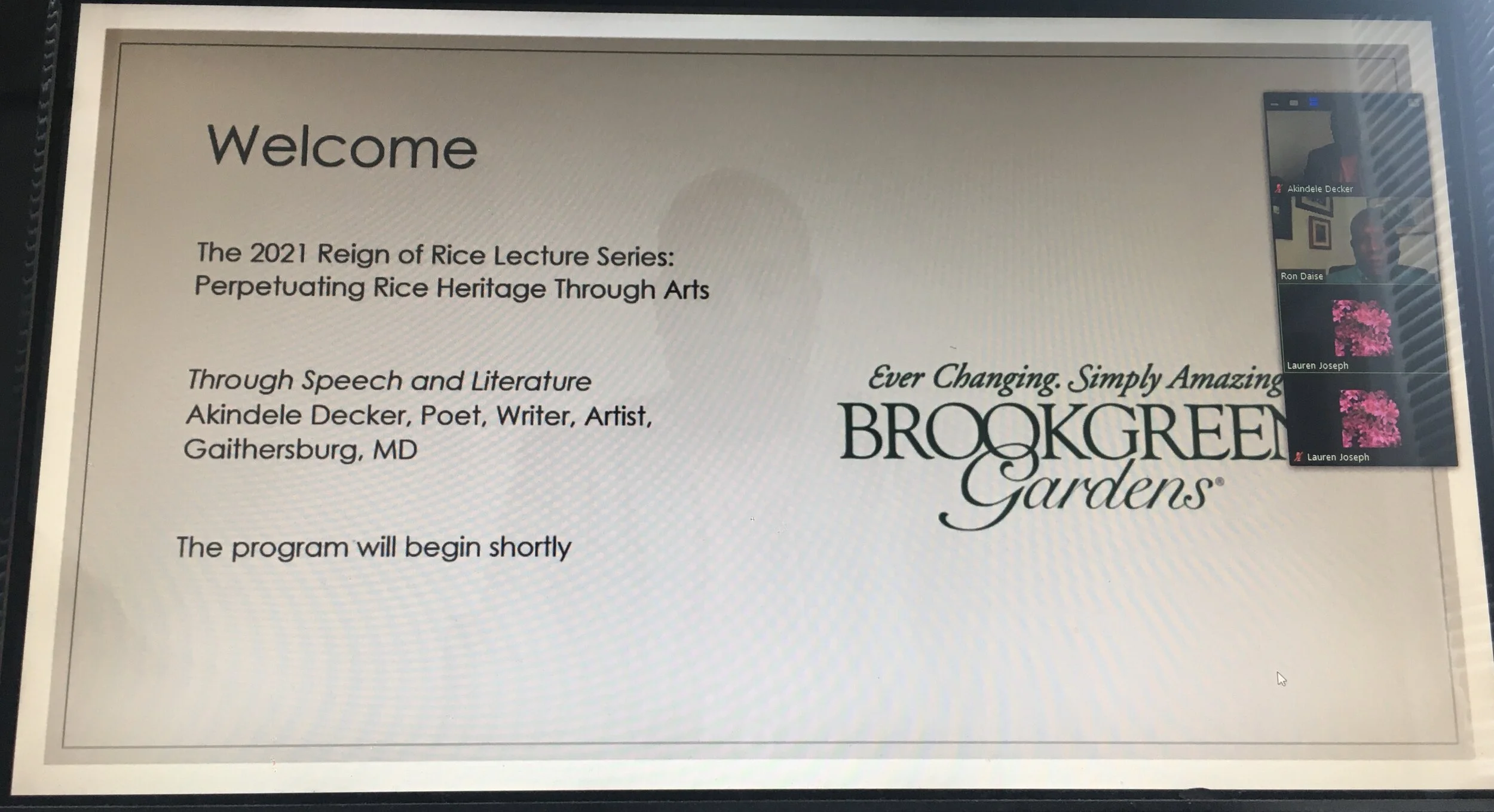
Being introduced by Mr. Daise, someone whom I have great respect for and admiration for his decades-long dedication and work on Gullah culture and history, was an epic feeling for me. I remember watching “Gullah Gullah Island” growing up, before I knew what Gullah was and found the show intriguing then. His journey as a historian/storyteller has evolved much more beyond the show. Throughout his journey, he has traveled to Sierra Leone a few times, and even traced his dna ancestry to the Temne of Sierra Leone. Having learned more about the broader intellectual and cultural efforts and impact of Gullah Storytellers and Historians like Mr. Daise over the years, I’ve come to appreciate even more, the way we all tell our stories and the historical value in telling our histories, whether creatively or academically.
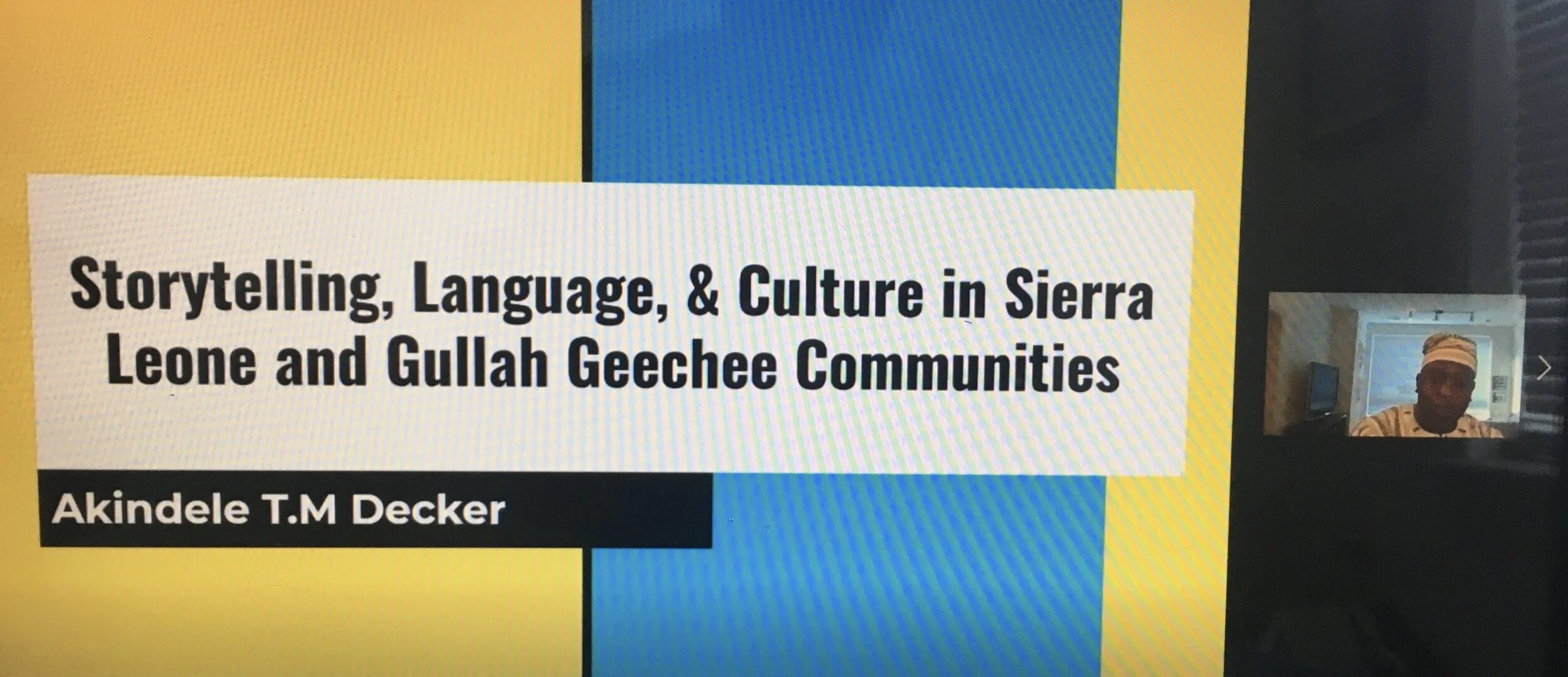
There was also a reason why, beyond the great opportunity to share the Sierra Leone story and perspective about our amazing cultures and history on such a platform as Brookgreen, that in all the years I’ve been engaged with some activity of storytelling, this lecture was a very emotional one for me.
If you know me well, you may know the admiration I have of my Grandfather, Thomas Decker, and his dedication throughout his life, of not only telling Sierra Leone stories, but his defense of it, particularly our language, in a colonial and post-colonial era where our national and local identities were placed on low points and regarded as inferior. Despite the challenges, he persisted and wrote poems and plays from the 1930s until the 1960s in our language, even translating Shakespeare’s Julius Caesar into Krio to prove that our language was a unique and official language. Part of his aim was to also translate some of these works so that they could be appreciated and understood locally, in ways more relatable to us.
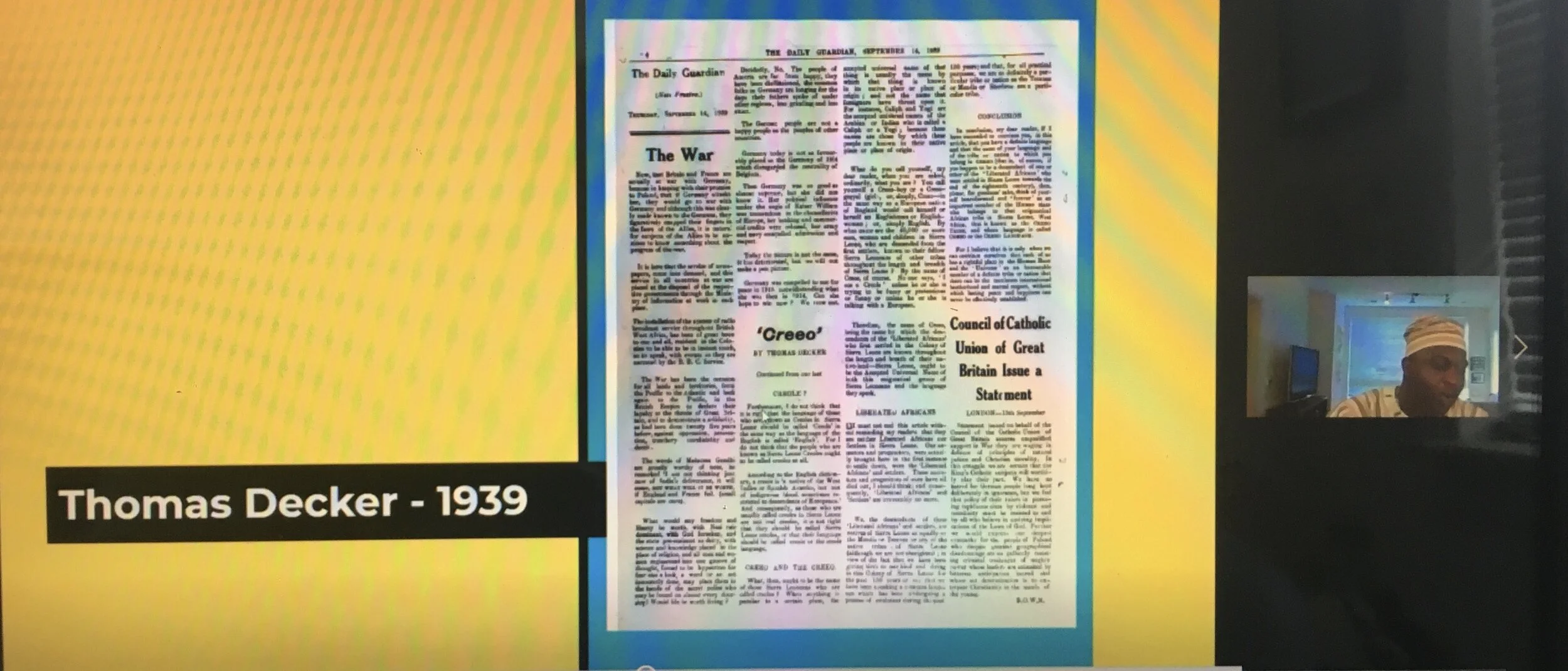
It was a search for more information on him 13 years ago that led me to first learn about who the Gullahs were and sparked the interest I’ve pursued over the years in getting to know more about their culture and history, especially as it relates with ours.
I got to talk about Grandpa’s work around the Krio language and some of his contributions to the evolution of the written form of the language, as well as that of his African American counterpart/contemporary, Dr. Lorenzo Dow Turner who had a similar, though more academic, pursuit around the Gullah language. I only learned just a few years ago, that these two men after about 20 years of defending these two languages in their respective countries, met in Sierra Leone, and worked together very briefly, to further understand the connection of both languages during Dr. Turner’s trip there in the 1950s.
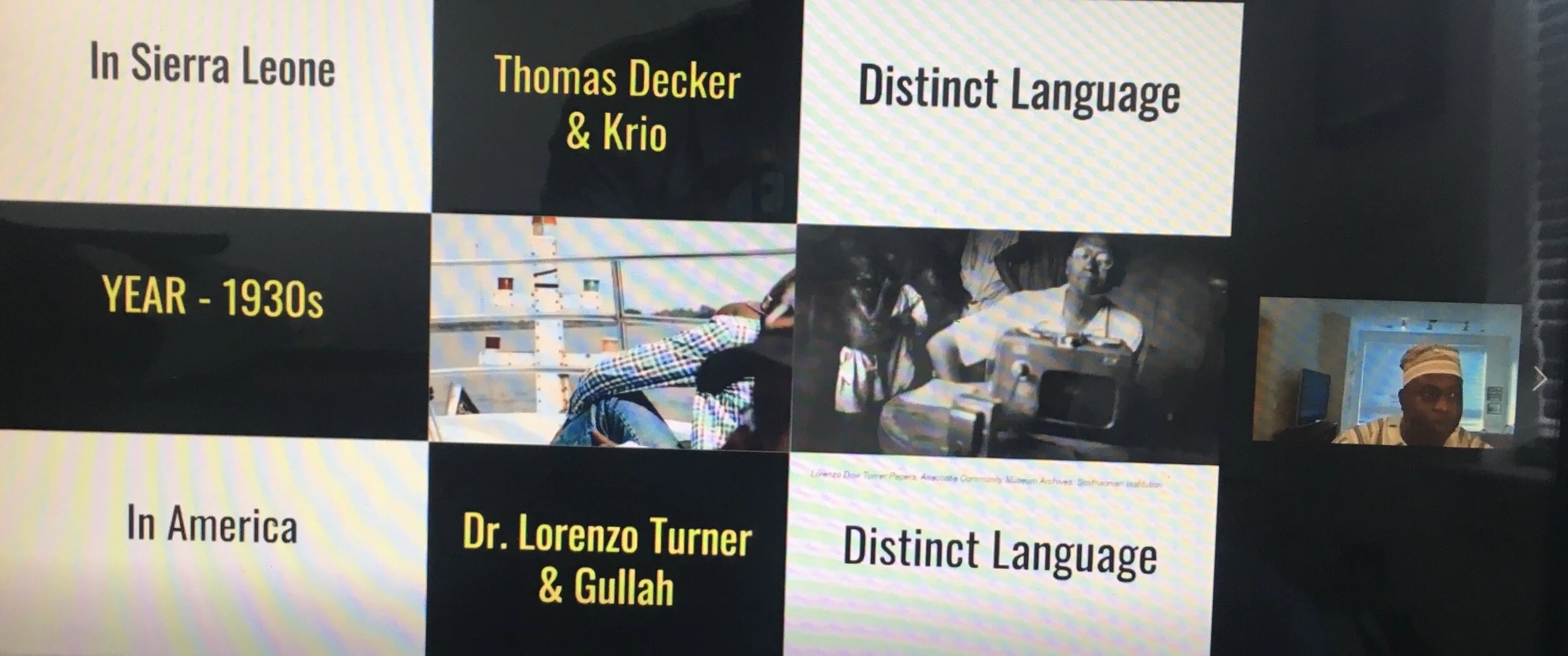
Chronicling the important work of these two men, as well as others in Grandpa’s literary circles, such as Julinana Rowe and Gladys Casely-Hayford was an epic experience for me. I felt this to be a 360, coming full circle for Grandpa’s work, who during his time, I don’t think had an opportunity to visit South Carolina and get the opportunity Dr. Turner had, to engage with a such a historic Atlantic language of a people who are culturally, much like ours. I can only imagine what that opportunity would have been like for him, and how much value that may have added to his literary journey. What other works of poems and plays would he have created based on a wider space of stories and connections that tell an even larger story of the black and African journey?
I hope he is pleased, that not only his story was shared eventually, to a distant family of African Americans across the sea, but also that the interest in both Krio and Gullah languages have not faded but continue to add value to a much needed social discourse and history that needs more telling, particularly by those most local to it.