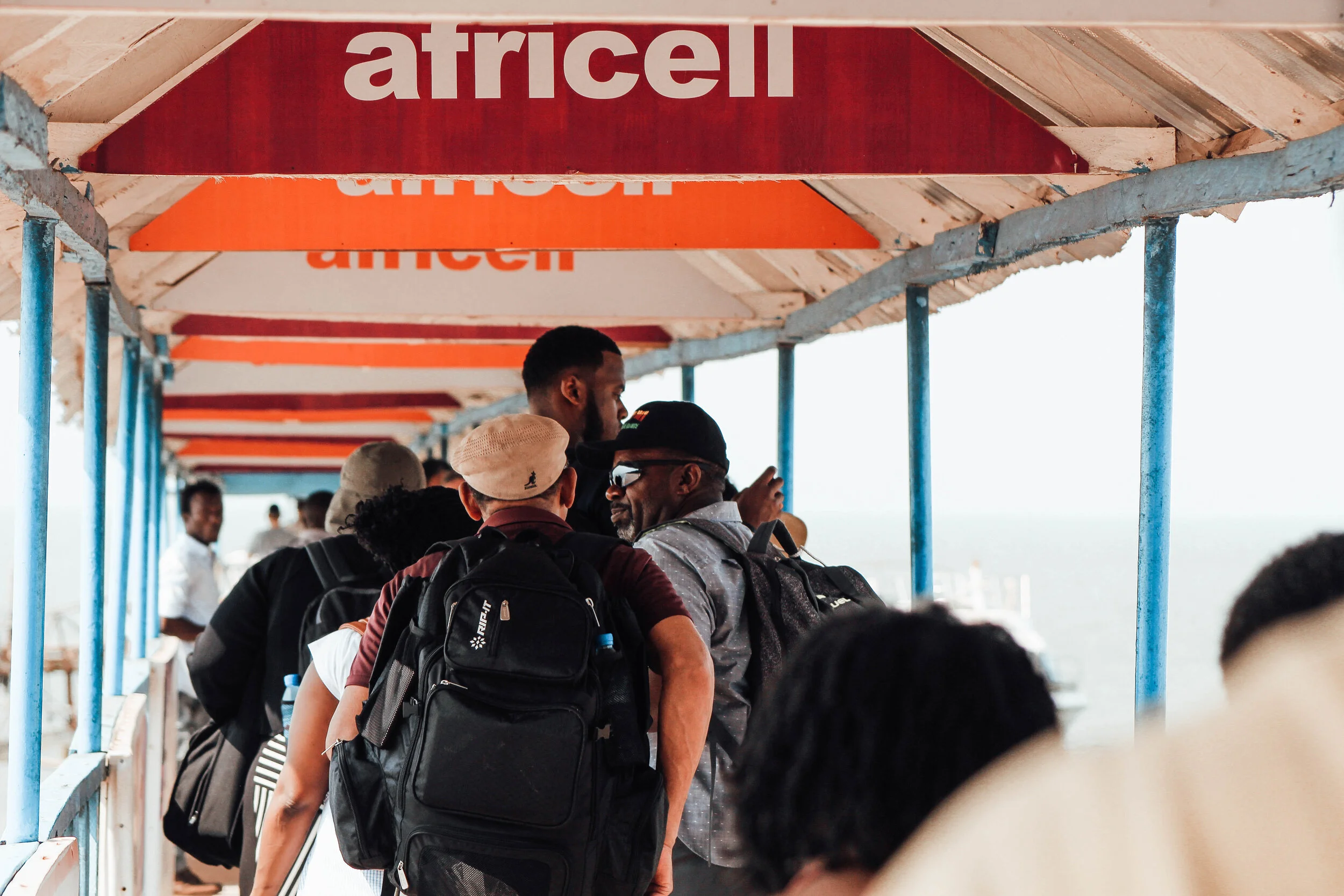
A group of about 50 African Americans from South Carolina, Georgia, Florida, Maryland, facilitated by Fambul Tik traveled across Sierra Leone, receiving hearty welcomes from communities in almost all regions.
A list that included several Commissioners of the Gullah Geechee Heritage Corridor, Scholars, Performers and Storytellers, they experienced the diversity and beauty that Sierra Leone has to offer. Of course it wasn’t without the shortcomings and obstacles a trip with so many people would have, but the experiences and it’s historical value cannot be understated.
The group received its first hearty welcome in Lungi by the Chief and performers as drums and shouts rang through the halls of Lungi Airport Hotel where the guests stayed for the night.
The journey followed with a visit to the historic Bunce Island where they got a chance to trek through the fort that many African Americans were taken through as enslaved people to the Americas during the transatlantic trade. With a guided tour by Fambul Tik founder Amadu Massally, the guests got serenaded by the notable Gullah Storyteller and Actor, Ron Daise.
We then headed on about 3 buses to Makeni where again the guests were welcomed by traditional performers of the community. In partnership with the University of Makeni and Ewomen, a rice feast introduced the guests to Sierra Leone’s many variations of rice including rice ‘res’ pap, rice bread, rice akara, fried rice-Makeni style, and of course white rice with Crain Crain and cassava leaves. This was to highlight the symbolism of rice as the key connecting factor between West Africans and the history of African Americans from the Gullah region. The group was entertained by the traditional performers as well as performances by Gullah Educator and Storyteller Aunty Pearlie and the Gullah Kinfolk among others.
The next day the journey continued for a 3-hour drive to Old Yagala village in Kabala, where again the guests were welcomed by several chiefs and traditional performers of the Limba people. While some guests chose to stay in the village and mingle, the rest drove up to the base of Yagala hill to start the 1 hr climb up. It was incredible to see the perseverance in the African Americans, some as young as 20s, others in their 70 making the climb all the way to the top of the 2+ mile long hill. At the top where remains of the old town that was built and designed to resist slavery and stop slavers from capturing the inhabitants during the transatlantic trade. After the 1hr climb down, all of the guests drove back to Makeni where we spent the night.
Morning came for many as the group got ready for about an hour+ drive to Magburuka to Robonko village. Again, the guests were welcomed by the Chief and traditional performers from the largely Temne community. The highlight was when Gullah expert and renowned sweetgrass basket maker, Nakia Wigfall sat with a local shuku blai maker and they both made baskets together in real time. Along with rice, sweetgrass baskets techniques and interest have also survived hundreds of years in the Gullah region, passed down mainly through generations of Grandparents and Grandchildren.
The guests after spending about 3 days in the Northern part of the Sierra Leone provinces made the drive to the capital city of Freetown where I’m sure the guests were happy to rest and reflect on the experiences so far, preparing for the next set.
The Freetown experience started with the watch night service where the guests rang in the New Year at the historic Zion Methodist Church on Wilberforce Street, a Church that has been there since 1792 and was established by the African American settlers who settled and named the city Freetown. It was full circle for many of the members as black Americans from South Carolina made up a substantial number of the 1,000+ Black Loyalists who settled there in 1792 after the American Revolutionary War, this beginning the historic heritage of Freetown that was to come.
The experience continued later on New Year’s Day with a guided tour downtown by former KDU Global Chairman and Bunce Island preservation Board Member, Melbourne Garber. Guests took walks around the old Fourah Bay College at Cline town, old wharf, Cotton Tree, Maroon Church and other key historical areas in downtown that illustrates the epic return and abolition movements that Freetown played such a crucial role in during the 18th and 19th centuries.
The theme for the tour and visit was to highlight Sierra Leone’s historical value in the transatlantic trade and the middle passage, particularly in the areas of Slavery, Resistance to it, and Abolition from it.